
Deeptech Dynamics
Comprendre comment les startups deeptech passent à l'échelle.
Les startups deeptech ne se développent pas comme les startups numériques. Cycles longs, financement intensif, industrialisation complexe : leurs dynamiques de croissance restent encore mal comprises — et donc mal accompagnées.
Fondé sur plus de 5 ans d'accompagnement de +100 startups deeptech via l'accélérateur 21st by CentraleSupélec, l'observatoire Deeptech Dynamics a pour mission de changer cela.
Un outil de référence pour l'écosystème deeptech
Deeptech Dynamics produit des analyses rigoureuses sur les trajectoires de croissance des startups deeptech : comment elles se structurent, à quel rythme elles évoluent, quels choix stratégiques font la différence.
Ses publications s'adressent aux entrepreneurs, aux investisseurs, aux accélérateurs et aux décideurs publics qui accompagnent la transformation de la recherche scientifique en entreprises industrielles.
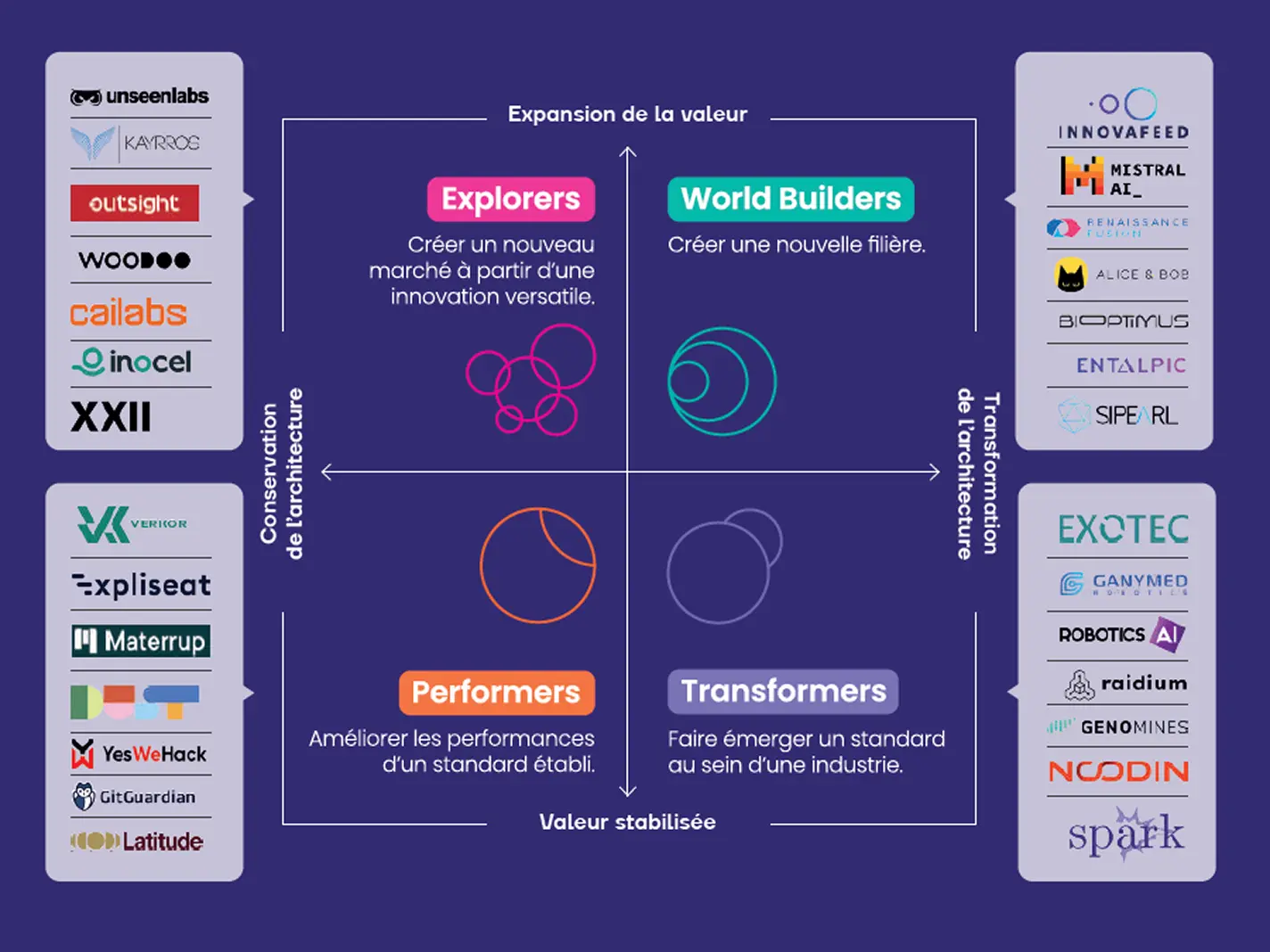
Cette édition inaugurale analyse les trajectoires de croissance de plus de 240 startups deeptech françaises, à partir de données d'investissement, d'indicateurs de développement et d'une analyse sectorielle approfondie.
Au cœur de l'étude : la Deeptech Quadrant, un nouveau cadre d'analyse qui identifie quatre régimes de croissance distincts dans l'écosystème deeptech.
Plutôt qu'un modèle unique de réussite, les startups deeptech suivent des trajectoires différenciées — selon la maturité de leur technologie et l'ampleur du marché qu'elles cherchent à transformer. Ces logiques contrastées, allant de la spécialisation technologique à la construction de systèmes industriels complets, sont au cœur de l'analyse.
L'étude répond notamment à ces questions :
- Pourquoi certaines startups deeptech changent-elles d'échelle plus vite que d'autres ?
- Comment maturité technologique et expansion de marché interagissent-elles dans le temps ?
- Quels choix stratégiques déterminent les trajectoires de croissance ?
- Comment mieux accompagner ces entreprises — en tant qu'investisseur, accélérateur ou décideur ?
Téléchargez l'étude
Le formaulaire n'a pas pu être transmis. Veuillez réesssayer.
Nos sponsors


Nos partenaires