


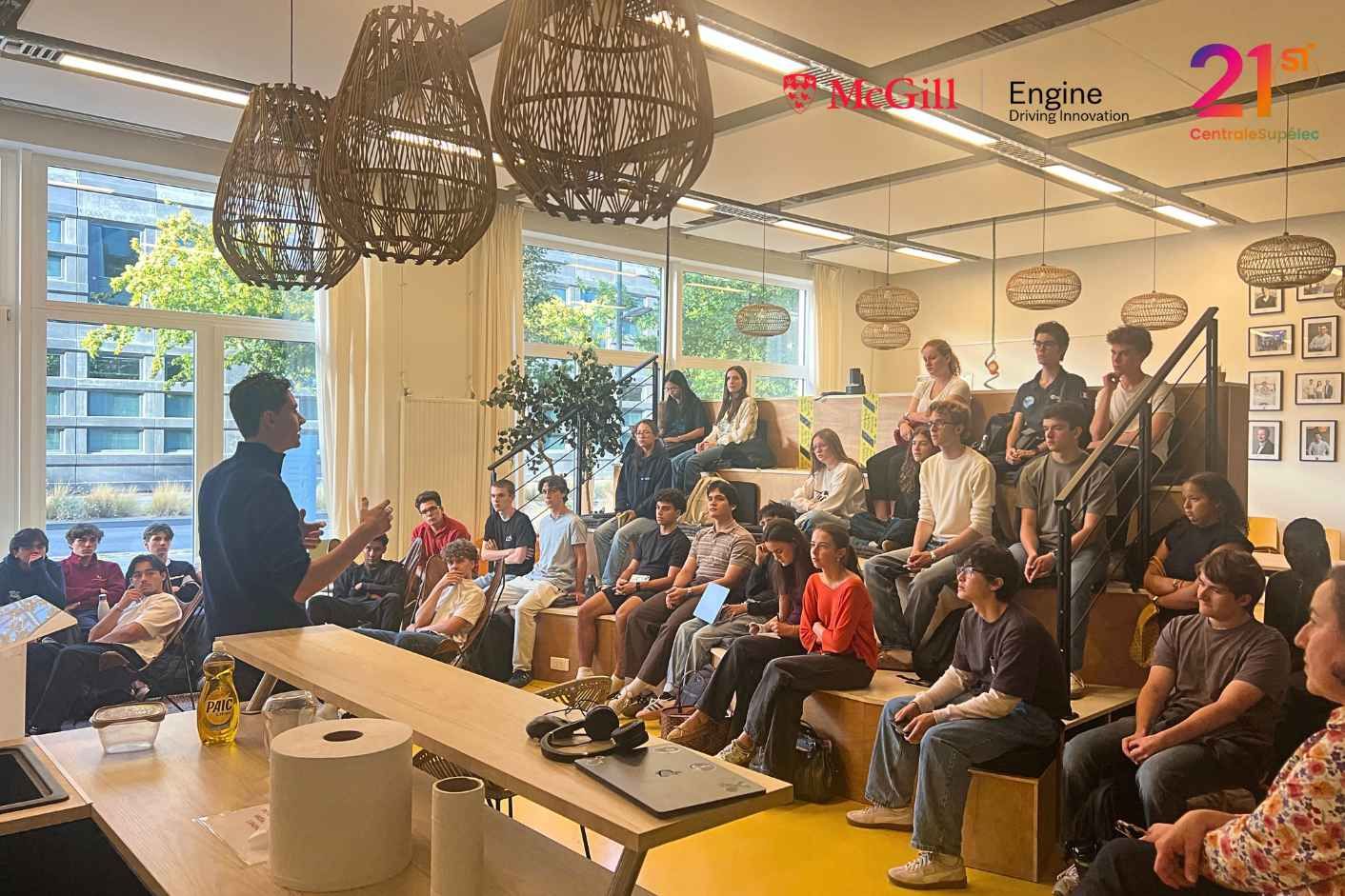
A recap of the masterclass "5 Essential Keys to Creating a Product That Matters," hosted by @Éric Tholomé, former Director of Product at Google and a renowned tech leader. For over an hour, he shared 25 years of experience in creating and launching international-scale products with our entrepreneurs — from Gmail to YouTube, including innovation programs involving over 5,000 engineers.
A huge thank you, Éric, for this rich, authentic discussion and for all the value you brought to the entrepreneurs who came to speak with you!
Here are some of his key takeaways:
1. Anchor every decision in user value
A good product always starts with a simple question: "What user need are we truly trying to address?"
When making a decision, always keep the user in mind. Losing sight of the user probably means heading in the wrong direction.
2. It's better to meet an existing need than to create an artificial one
It's much simpler — and more effective — to address a real, already expressed need.
But be warned, user resistance to change is enormous. You need to provide a solution that is genuinely faster, genuinely better, or genuinely cheaper than what exists, to significantly increase your chances of success.
3. Simplicity is a strength… and a discipline
A simple, high-performing product changes everything.
Adding features is easy; managing their adverse effects is much less so.
Creating a product that feels intuitive and seamless to the user is one of the most complex challenges in product management, leading to the greatest successes.
4. The idea, the tech, that's only 1% of success
We often get the impression that once you have the right idea, or the new tech that will change everything, you've won.
In reality, 99% of the work remains, with half of that being designing the right product, and the other half ensuring the product reaches its audience (the "go to market").
5. Find the balance between listening to users and strategic vision
Losing sight of users to pursue a hypothetical vision at all costs risks hitting a wall of pointless innovation.
Conversely, focusing solely on user feedback means staying incremental, missing out on the innovation that will truly change the game and keep us ahead of the competition.
It's a harmonious mix of the two that will lead to the greatest and most sustainable success.
6. Find the balance between immediate execution and long-term vision
You will constantly be torn between short-term urgencies and future ambitions.
The key is discipline: intentionally allocating time to each horizon.
The rule proposed by Éric:
- 70% in the short term,
- 20% on promising medium-term opportunities,
- 10% on the long-term vision and strategy.
This is what allows us to perform well today while building for tomorrow.
7. The best teams cultivate constructive friction
A high-performing team isn't one where everyone always agrees.
The positive friction is essential: it clarifies thinking, strengthens the product, and serves the user.
The problem isn't disagreement — it's disagreement that isn't constructive.

.jpg)
.jpg)