

Sometimes, an entrepreneurial spirit just needs the right playing field to flourish. In 2024, while a fifth-year student at SupBiotech, Clémence Guyoux participated in the iGEM international synthetic biology competition. Amidst the debate surrounding the struggles of the French sugar beet industry and the return of neonicotinoids, the young IONIS-Paris team she was part of stood out by proposing an innovative idea to combat the scourge of agricultural viral diseases using RNA interference, also known as interfering RNA (RNAi).
"Raised with a taste for science"
The biotechnology engineer knows exactly what she is doing. The desire to put science at the service of living things has guided her since she was a child. "I was raised with a taste for learning science and the belief that it should have a positive impact on society," says the student, who will soon head off for a semester at the University of California, San Diego, renowned for its biotechnology curriculum. "On the other hand," she adds, "I have entrepreneurs in my circle who instilled in me the spirit to take risks and have always supported me." Some might say she was destined for this.
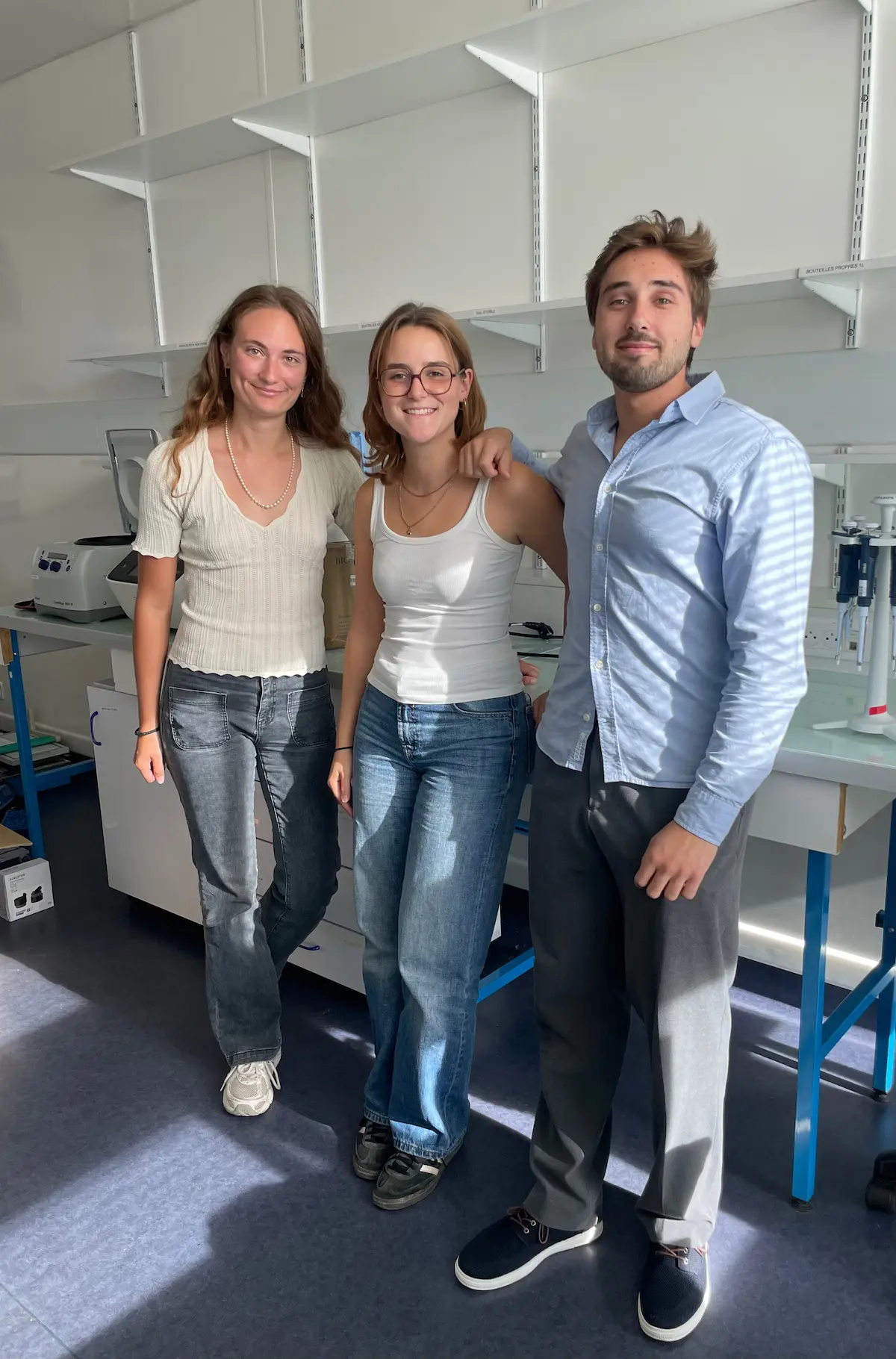
In the wake of iGEM, Clémence Guyoux and Baptiste Bonnet, also a SupBiotech graduate, teamed up to strike while the iron was hot. A few months and dozens of meetings with researchers and farmers later, they created Demetis. For Clémence Guyoux, it all makes sense. The startup is emerging at the intersection of the profound challenges of our time: agricultural productivity and sovereignty, biodiversity preservation, and the protection of human health.
The promise of RNAi
Demetis bases its solution on interfering RNA, the first effects of which were observed in plants in the early 1990s, before the mechanism was elucidated in a worm in 1998—studies that earned Andrew Fire and Craig Mello the 2006 Nobel Prize in Medicine. Building on their initial work, Clémence Guyoux and Baptiste Bonnet became convinced that RNAi could help fight certain viruses responsible for significant damage in sugar beet crops, thereby eliminating the need for pesticides that are harmful to biodiversity and human health. "The farmers we met spoke of the dilemma they faced: they would have liked to stop using these products, but they had to ensure their yields, feed the population, and make a living themselves," she recalls.
According to some studies, viruses cause nearly half of the world's emerging plant disease epidemics, resulting in more than $30 billion in annual economic losses. In the case of sugar beets, aphids carry and transmit the beet yellows virus to the plant. The conventional approach is to kill the insects to stop the virus. Demetis, however, approaches the problem from a new angle: the startup targets only the virus to prevent it from spreading, thereby preserving the insects. Once inside the plant, the released RNAi precursors neutralize specific genes in the agricultural virus's genome. As a result, the viruses can no longer replicate. "This mechanism is highly effective, as shown by numerous academic studies on the subject," says an enthusiastic Clémence Guyoux. Currently in development, Demetis's first RNAi solution will target the four main viruses affecting sugar beets. In June 2026, the company filed its first patent.
The quest for the right vector
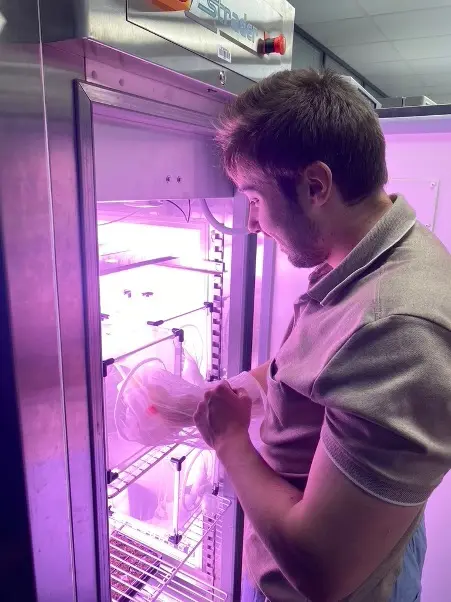
A second project is occupying the startup, this time focusing on the "envelope" that contains and protects the RNAi: the vector. Demetis is looking toward plant-based nanoparticles, which appear to offer greater stability. "We are looking to identify a vector capable of carrying other types of molecules, or targeting other things like bacteria." Once this vector is identified and the first pre-seed funding round is closed, likely "sometime in 2027," field tests will need to begin. While waiting to bring an RNAi-based antiviral to market, "developing a versatile vector in parallel should allow us to pursue collaborations and co-productions more quickly," she notes.
In an epic journey that feels like a marathon, Clémence Guyoux is arming herself on all fronts. In 2025, she joined the CentraleSupélec-ESSEC master's program "to develop the business side we were missing." Demetis also benefits from the 21st by CentraleSupélec Sprint program and has the support of WILCO, INRAE, and the Technical Institute of the Beet (ITB). "CentraleSupélec provides a framework, an ideal support system when you're a deeptech startup," the young entrepreneur says. "We feel genuinely supported by the ecosystem. Without it, we wouldn't be moving this fast."
KEY FIGURES
-30%. The average crop loss in French sugar beet fields in 2020 due to viral yellows (source: https://cgb-france.fr/presse/la-cgb-alerte-sur-lapparition-generalisee-de-la-jaunisse-viraledans-la-plaine-betteraviere/)
$30 billion. The cost of yield losses attributed to plant viruses worldwide, according to some studies (source: https://pmc.ncbi.nlm.nih.gov/articles/PMC7911862/)