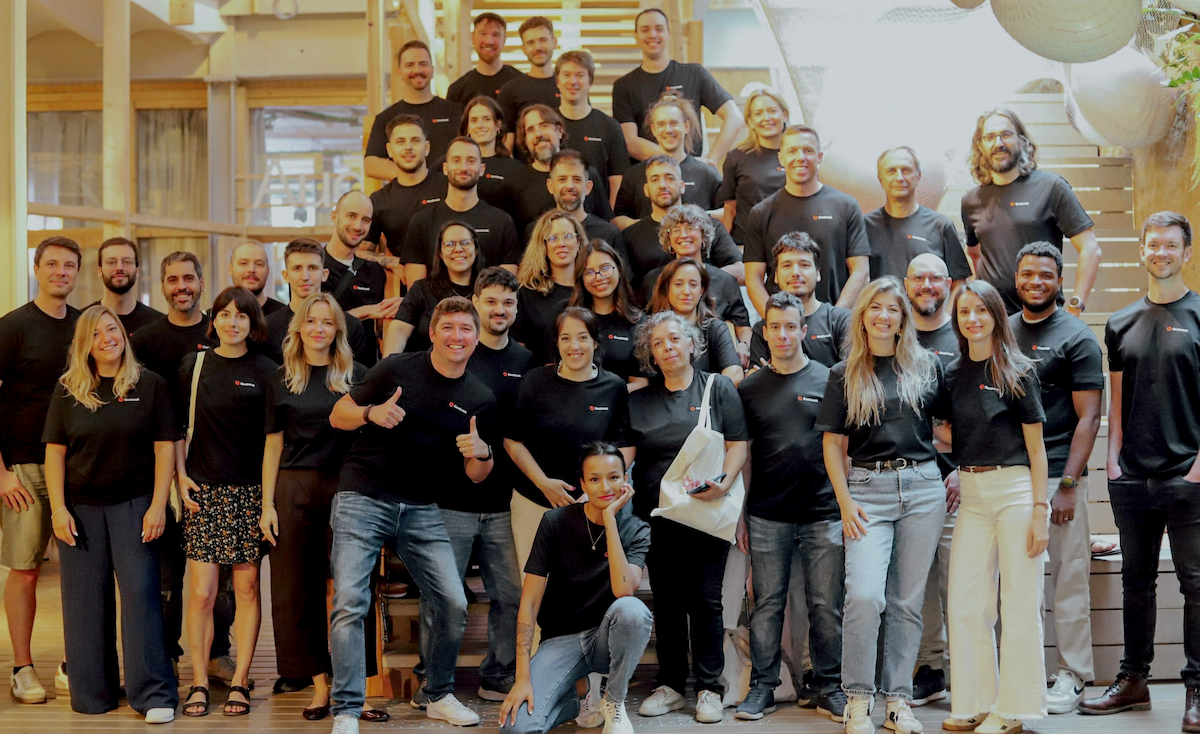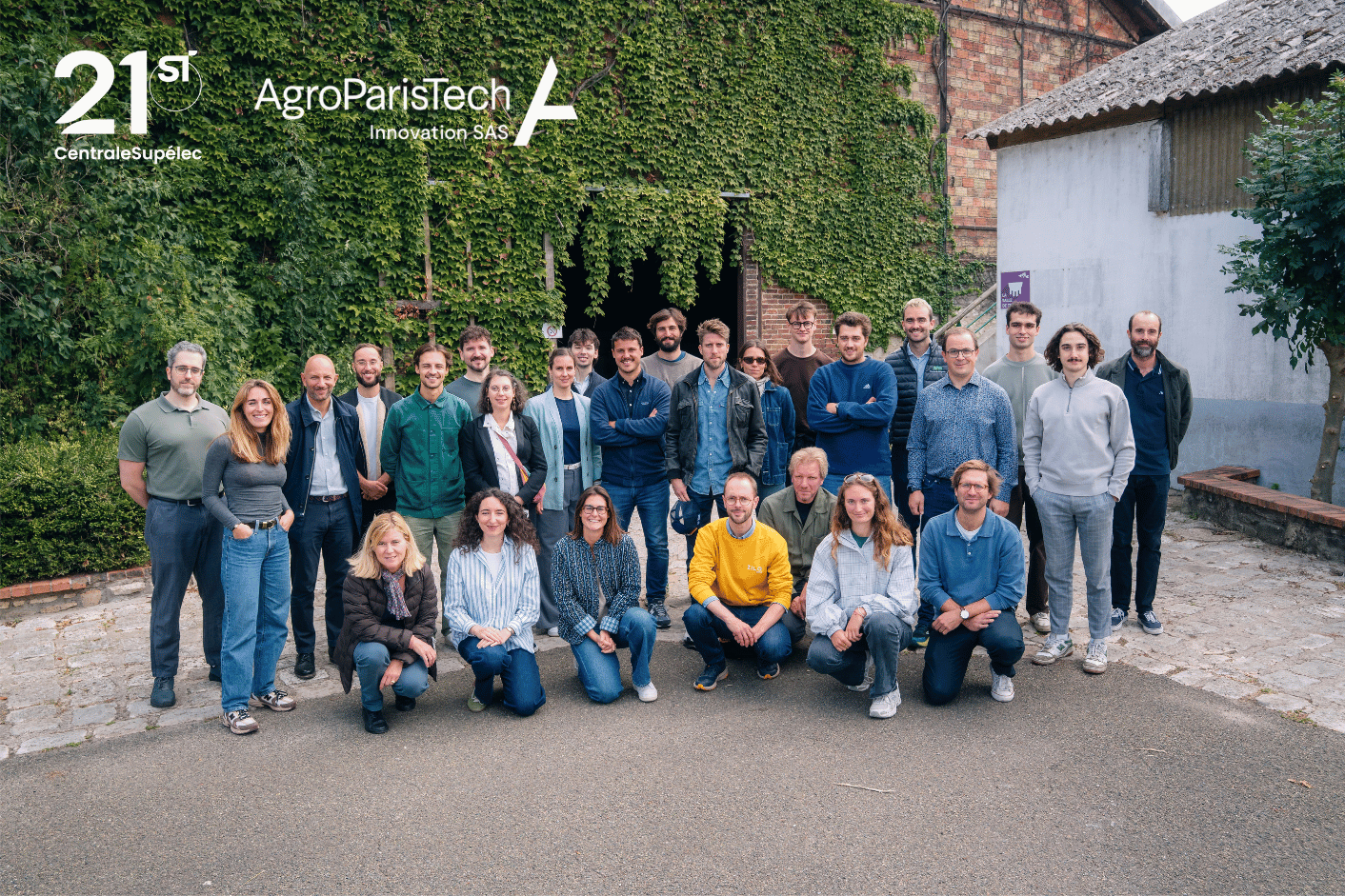


Supported by 21st by CentraleSupélec, Ed.ai has big ambitions in France and the United States. A Le Livre Scolaire alumnus, its CEO and co-founder Jonathan Banon is convinced that LLMs (large language models) can empower teachers to better support their students.
“I had my heart set on becoming an astrophysicist, but when I realized during my theoretical physics degree that there were people much brighter than me and that the living conditions for a researcher in Paris were nothing to envy, I quickly gave up,” Jonathan Banon admits, without regret. Fortunately, he has other strings to his bow. Among them, a keen interest in tech and entrepreneurship. “When I entered CentraleSupélec, I came for one thing: its entrepreneurship program and its incubator,” he says. When it came time for internships, the Lyon native even implemented a surprising ‘vaccination’ strategy, taking an IT consulting job at IBM... with the idea of getting it out of his system, “so I could then focus 100% on starting a business!”
The success of Le Livre Scolaire
Once in the CentraleSupélec entrepreneur program, just as he was starting an HR platform project, his eye was caught by a post on Facebook. A sign of fate: two entrepreneurs, an HEC graduate and a history teacher, were looking for a tech-oriented partner for a project involving school textbooks. Jonathan Banon wasn't interested in the subject, but he contacted them anyway. “I had a hunch,” he recalls. They hit it off so well that he abandoned his first project. In January 2014, the trio teamed up to create Le Livre Scolaire, an innovative collaborative textbook publisher. Six years later, the startup had modernized the genre and held 10 to 15% of the middle and high school market. Just before Covid, the co-founders sold it to Hachette.
In November 2022, as Jonathan Banon was finishing his contract to ensure the transition, a certain ChatGPT burst onto the scene. The entrepreneur immediately became passionate about this AI and understood the disruption it represented. “When we needed 15 people for certain tasks, suddenly one was enough.” His entrepreneurial spirit was stirred again, but he hesitated. Once free, he explored other paths, including space, as an attempt to return to his roots. “But I was afraid of ending up doing engineering work for engineers. So I returned to education, driven by a quest for utility and bridges between professions,” he relates.
With LLMs and their reasoning capabilities, he realized he could unlock an incredible range of use cases. And as an engineer, he was obsessed with building a must-have: "Given the heavy constraints in education, if you don't build a truly life-changing solution, it's a lost cause." During a conversation with a teacher friend—who has since been hired—grading exam papers emerged as the obvious path to take. From there, everything moved fast. In September 2024, Jonathan Banon and fellow Centrale graduate Cédric Bignon founded Ed.ai. Rémi Mazières, who came from an educational background, completed the core team. By summer 2025, the vision crystallized: a supercharged AI assistant capable of grading papers and generating remedial learning paths. The platform is remarkably simple: teachers enter their prompts and rubrics, and then, after the exam, use school scanners to upload the entire batch of papers as a single PDF. The tool analyzes it and handles intelligent pre-grading. "After a few weeks, the time savings are clear," says Jonathan Banon. Down the line, Ed.ai offers personalized remedial content. Increasingly popular in the US, this approach focuses on helping individual students or groups target their specific learning gaps. "Our core mission is to save teachers time on grading while providing them with tailored educational content to better support student progress."

American conquest
Ambitious, the startup wants to move fast to build a massive dataset and create a barrier to entry. Thanks to a partnership with the Academy of Lyon, it was able to process 100,000 papers between January and June 2026. And the pace is accelerating. “The more we feed our platform specific cases, the more it improves and distinguishes itself in the market,” explains Jonathan Banon. At the start of the school year in September 2026, a few institutions also began testing it across the Atlantic, “where the AI-education battle is taking place. If we don't go there now, they will come to us.”
Even so, Ed.ai’s heart firmly beats in France. The startup also carries a distinctly Centrale DNA. Accelerated by 21st by CentraleSupélec, it received backing from CentraleSupélec Venture. The fund took part in both of its funding rounds, including the latest €5 million round finalized in September 2026. "Above all, we are deeply shaped by that fundamental problem-solver mindset taught at CentraleSupélec," explains Jonathan Banon.

Key figures
30,000. The number of student papers Ed.ai processed in the month of September 2026 alone.
30 to 90%. The estimated time saved on grading papers thanks to the AI platform.